




September 11 Classroom Activities: Teaching About 9/11 & Patriot Day
Share this Post
September 11 can be one of those lessons that teachers know is important to cover but may not always feel sure how to approach… especially with elementary students.
How much should you explain? What details are appropriate? How can you teach students about what happened without overwhelming them?
If you’re looking for September 11 classroom activities that are meaningful, age-appropriate, and easy to use, I’ve got some ideas to help.

And if you’d rather not spend hours putting everything together yourself, I’ve also created a ready-to-use September 11 and Patriot Day lesson and activity resource that takes a lot of the prep work off your plate.
Looking for a Ready-to-Use September 11 Lesson?
If you’re short on time (and let’s be honest, when aren’t teachers short on time?!), this September 11 & Patriot Day resource gives you everything you need to introduce this important topic to your students in an age-appropriate way.
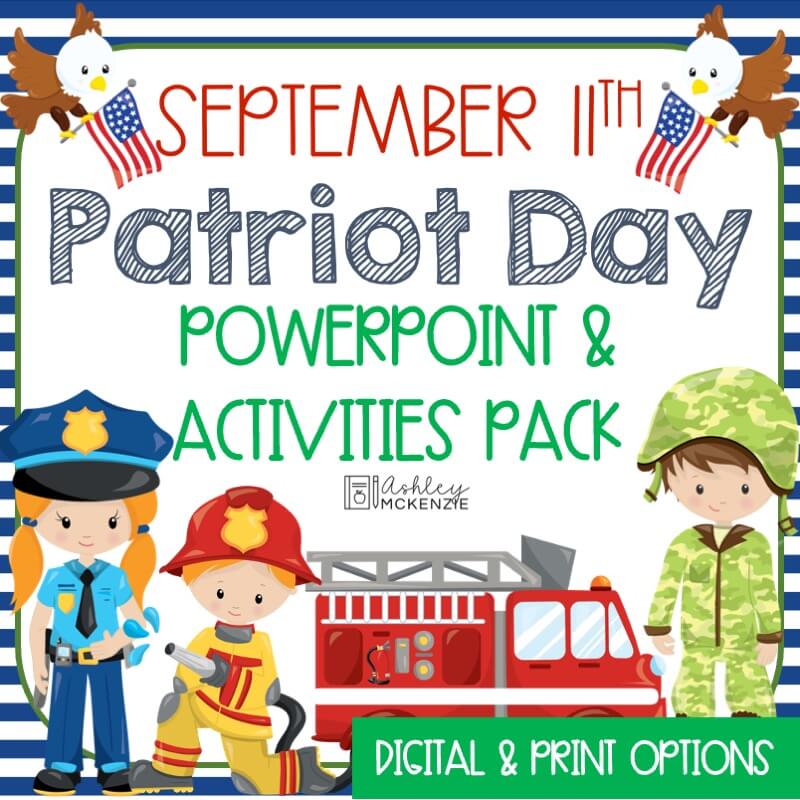
It includes a 23-slide PowerPoint lesson with photographs, student-friendly explanations, vocabulary, reading activities, writing activities, and more. A Google Slides option is also included for teachers who prefer to present the lesson digitally.
The resource has also received so many wonderful reviews from teachers who appreciate having a way to teach about September 11 that feels appropriate for young learners.
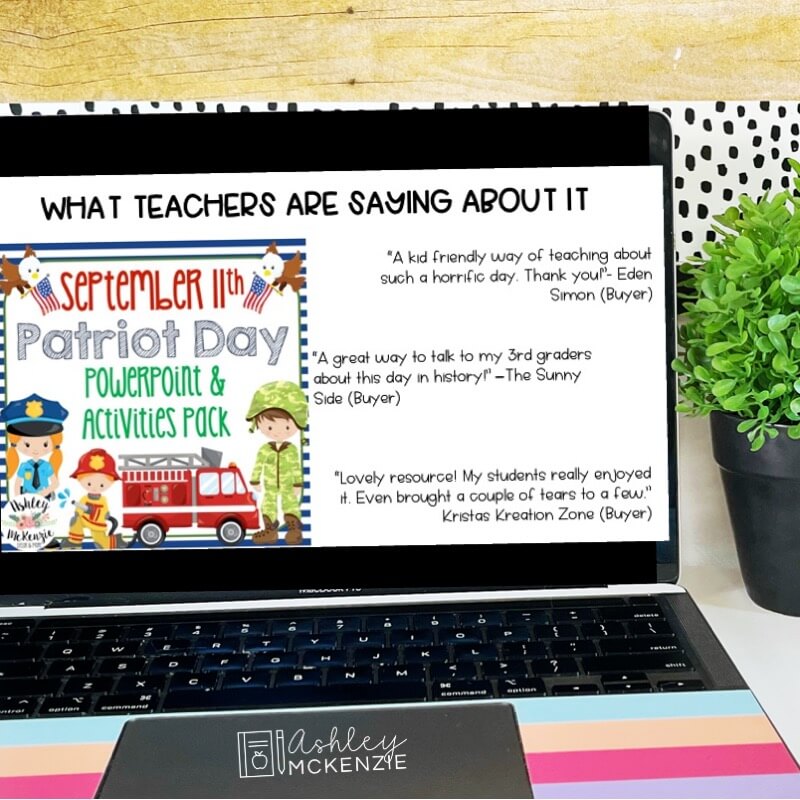
“It’s important to teach students the significance of 9/11 and this PowerPoint is informative and age appropriate. Thank you for handling this topic so delicately!” – Cindy (Buyer)
“I LOVE this! Finally something that helps explain 9/11 to students in a way they can understand. I’ll be using this every year.” – Emilee (Buyer)
“These resources were perfect for explaining to students the magnitude of this event. I especially liked the vocabulary posters with real images and student-friendly definitions.” – Kim (Buyer)
Find these reviews, and many more, for this resource in my TPT shop – and it’s also available here in my website store too.
How to Teach September 11 to Elementary Students
September 11 is a difficult topic, and there isn’t one perfect way to approach it with every class. Your students’ ages, maturity levels, prior knowledge, and personal experiences will all play a role in how much detail you share.
For elementary students, I recommend keeping the focus on the basic facts, the significance of the day, and the many people who helped others.
Here are a few things to keep in mind:
Keep the information age appropriate.
Young students don’t need graphic or frightening details. Focus on helping them understand what happened in simple, factual language that’s appropriate for their age.
Explain why September 11 is remembered.
Students may hear adults talking about September 11 or see the date on a calendar without understanding why it is significant. Give them enough historical context to understand why people remember and honor this day each year.
Focus on the helpers.
One meaningful way to approach this topic is to talk about the firefighters, police officers, emergency workers, military members, volunteers, and ordinary people who helped others during and after the events of September 11.
Give students time to reflect.
Rather than simply presenting information, give students an opportunity to think about what they learned afterwards. Writing, discussion, drawing, or a simple reflection activity can help students process the lesson.
September 11 Classroom Activities
If you’re looking for September 11 classroom activities for students, you don’t need to make the lesson complicated. A few thoughtful activities can give students opportunities to learn, reflect, and connect the lesson to their own lives.
Here are some ideas you can use in your classroom.
1. Start with an Age-Appropriate September 11 Lesson
Begin by giving students some basic historical context about September 11, 2001. A visual presentation can be especially helpful with elementary students because it allows you to introduce information in small, manageable pieces rather than expecting students to read through a long passage.
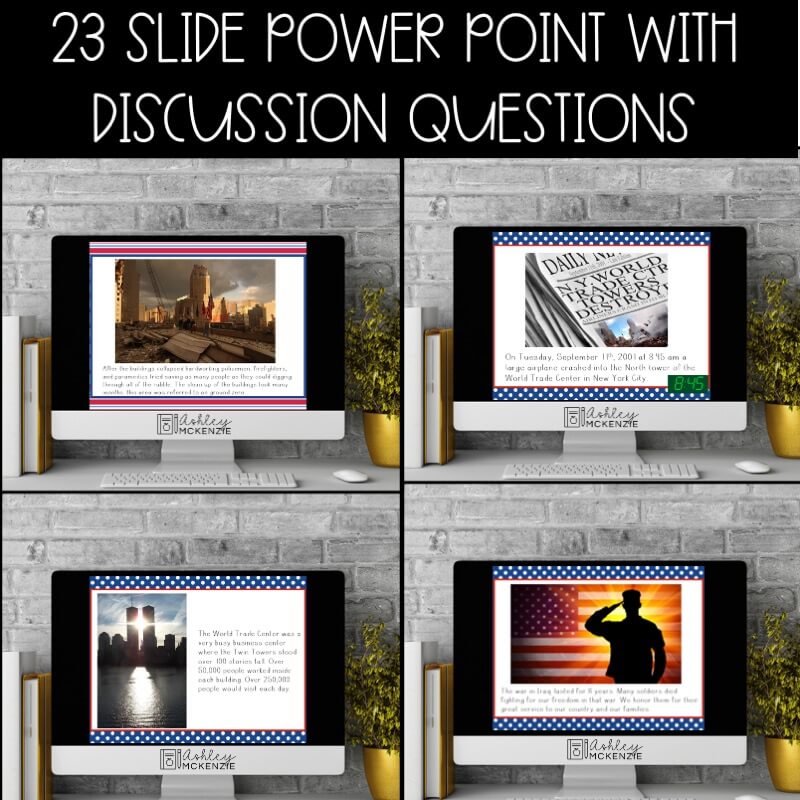
My September 11 & Patriot Day resource includes a ready-to-use PowerPoint lesson with photographs and student-friendly explanations, so you can spend less time preparing the lesson and more time guiding the conversation.
2. Introduce Important September 11 Vocabulary
Depending on the age of your students, introduce a few important words and concepts that will help them understand the lesson. You might discuss words such as:
- remember
- honor
- courage
- bravery
- emergency responder
- firefighter
- first responder
- memorial
- hero
- community
Student-friendly vocabulary can make it easier for children to participate in conversations about a difficult historical event.
3. Read and Reflect
After learning about September 11, give students a chance to reflect on what they learned.
You could have students complete a simple reading response, write down something important they learned, or share one question they still have.
The goal isn’t to expect students to fully understand the enormity of the event. Instead, give them space to process the information in a way that makes sense for their age.
4. Write About What You Learned
Writing is another meaningful way to help students reflect after a September 11 lesson. Depending on your students’ ages, prompts could include:
- What is one important thing you learned about September 11?
- Why is it important to remember September 11?
- What does the word courage mean to you?
- How did people help others after September 11?
- What does being a hero mean to you?
A short writing activity also gives you an opportunity to turn students’ reflections into a meaningful classroom display.
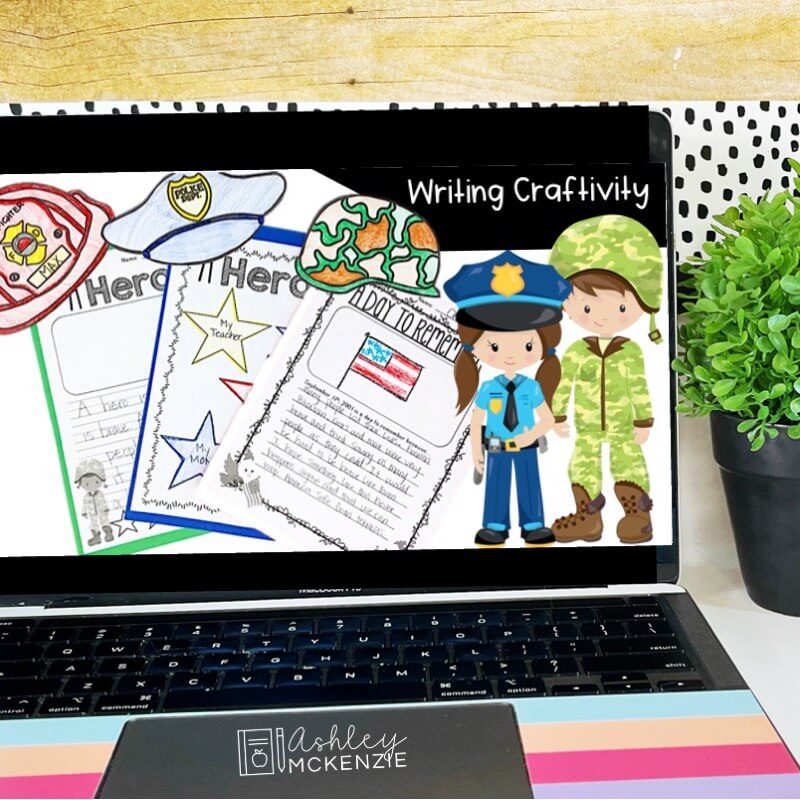
5. Write Thank-You Notes to Community Heroes
September 11 provides a natural opportunity to talk about people who help keep our communities safe.
Have students write thank-you notes to local firefighters, police officers, EMTs, military members, or other community helpers. Students can write about why they appreciate these people and what their service means to the community.
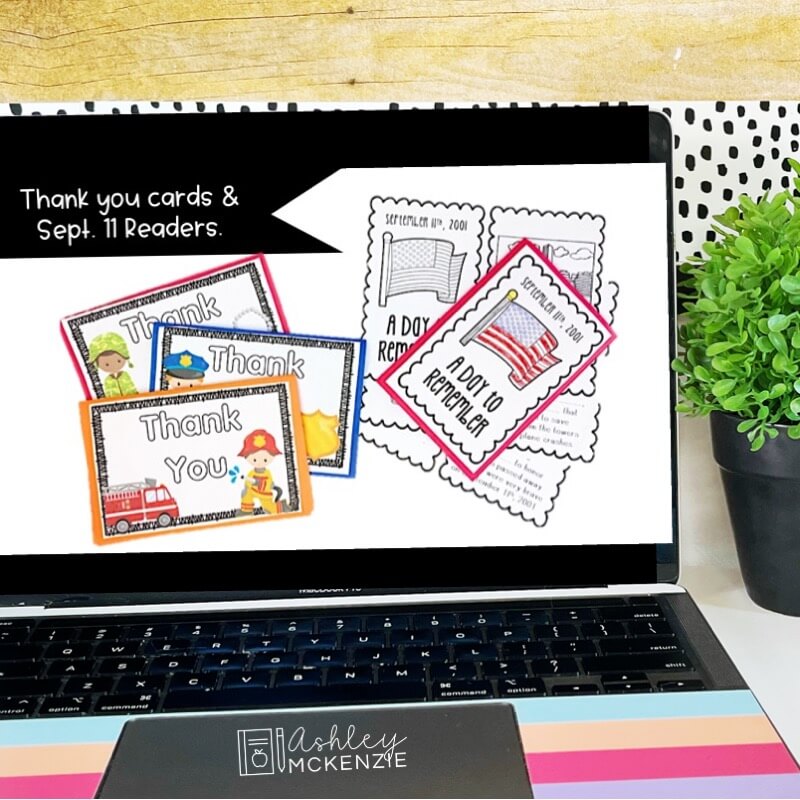
This can be a particularly meaningful way to shift the focus of the lesson toward gratitude and helping others.
6. Talk About Acts of Kindness and Helping Others
Another way to make the lesson relatable for elementary students is to connect the idea of helping others to their own lives. Ask students: What are some ways we can help other people?
Students could brainstorm simple acts of kindness they can do at school, at home, or in their community. You could even turn the ideas into a classroom display or class kindness challenge.
Patriot Day Activities for Elementary Students
September 11 is also known as Patriot Day, a day of remembrance observed each year in the United States. This gives you another natural way to approach the topic with students.
Rather than treating Patriot Day as simply another holiday on the calendar, use it as an opportunity to talk about remembrance, gratitude, courage, and community.
Some simple Patriot Day activities include:
- Learning why Patriot Day is observed
- Reading an age-appropriate passage about September 11
- Learning about first responders and other helpers
- Writing thank-you notes
- Creating a classroom display about courage or kindness
- Writing a reflection about something students learned
- Discussing ways people can help others in their community
September 11 Writing Activities
Writing can be one of the most effective ways for students to process what they’ve learned. After your lesson, try one of these September 11 writing activities:
“Something I Learned” Reflection
Have students write three things they learned during the lesson and one thing they would like to remember.
“What Does Courage Mean?”
Ask students to explain what courage means in their own words and give an example of someone who demonstrated courage.
Thank-You Note
Students can write a thank-you note to a firefighter, police officer, EMT, military member, or another community helper.
“How Can I Help?”
Have students think about ways they can help others in their own school or community.
These activities keep the writing focused on reflection, gratitude, courage, and helping others rather than asking young students to grapple with details that may be too difficult for them.
A Ready-to-Use September 11 & Patriot Day Resource
If you’re looking for September 11 lesson plans without having to create everything from scratch, this is exactly why I created my September 11 & Patriot Day resource. The resource includes:
- A 23-slide PowerPoint lesson
- Photographs and student-friendly explanations
- Information about September 11, 2001
- An explanation of Patriot Day
- A KWL chart
- Writing activities
- Thank-you note templates for community heroes
- 9/11 Readers
- A writing craft
- Google Slides version of the PowerPoint
The activities are designed to give elementary students meaningful ways to learn about and reflect on September 11 while keeping the lesson age appropriate.
And if you’d like to see what other teachers think, there are many more reviews available here.
Frequently Asked Questions About Teaching September 11
What is Patriot Day?
Patriot Day is observed each year on September 11 to remember the people who lost their lives in the terrorist attacks of September 11, 2001, and to honor the courage and sacrifice of the people who responded and helped others.
How do you explain September 11 to elementary students?
Keep the explanation factual, simple, and age appropriate. Avoid unnecessary graphic details and focus on helping students understand what happened, why the day is remembered, and how people helped one another.
What are some appropriate September 11 activities for elementary students?
Age-appropriate activities can include a visual lesson, vocabulary work, reading and reflection, writing activities, thank-you notes to community helpers, and discussions about courage, kindness, and helping others.
Should elementary students learn about September 11?
Teachers and schools may approach the topic differently depending on students’ ages and needs. When it is taught, keeping the information age appropriate and allowing students time to ask questions and reflect can help make the lesson meaningful and manageable.
What is the difference between September 11 and Patriot Day?
September 11 refers to the date of the terrorist attacks that occurred in the United States in 2001. Patriot Day is the annual day of remembrance observed on September 11 to honor those who were killed and recognize the bravery and sacrifice of those who responded.
Teaching About September 11 Doesn’t Have to Feel Overwhelming
September 11 is a difficult topic to teach, especially with young students. You don’t have to have the perfect words or create an elaborate lesson.
A simple, age-appropriate lesson followed by opportunities to reflect, write, and talk about courage and helping others can give your students a meaningful way to understand why this day is remembered.
And if you’d rather have the lesson and activities ready to go, my September 11 & Patriot Day resource can take a lot of the preparation off your plate.