



10 Thanksgiving Writing Activities for Elementary Students
Share this Post
Looking for Thanksgiving writing activities to keep your students engaged as the holiday approaches? November is a great time to bring some seasonal fun into your writing lessons! From creative writing prompts to persuasive writing projects and festive crafts, there are plenty of ways to help your elementary students practice their writing skills while celebrating the season.
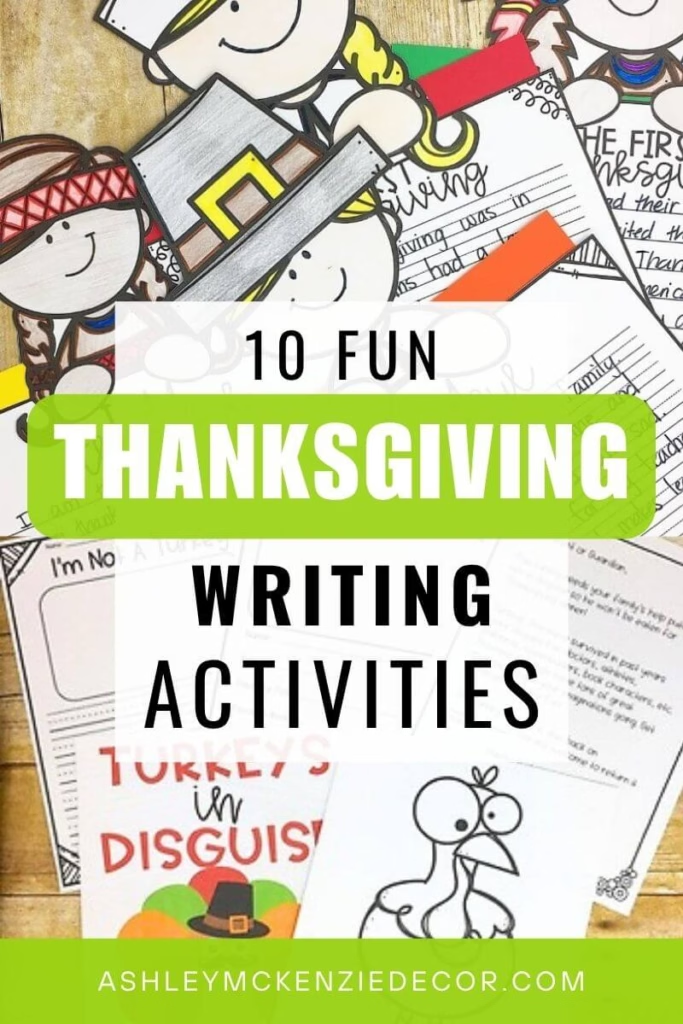
Whether you teach kindergarten or upper elementary, these Thanksgiving writing activities offer a mix of ideas to fit different grade levels, writing skills, and classroom needs. Even better, several of them can become adorable classroom displays that showcase your students’ hard work!
Let’s dive into 10 Thanksgiving writing activities your students will love.
1. Write About What You’re Thankful For
Thanksgiving is a natural opportunity to help students reflect on the people, experiences, and little things that make their lives special.
Ask students to brainstorm things they’re thankful for, then choose one or more ideas to develop into a piece of writing. Younger students might draw a picture and write a few sentences, while older students can expand on their ideas with details and examples.
Need a little inspiration to get them started? Try these Thanksgiving writing prompts:
- I am thankful for…
- One person who makes my life better is…
- Something that always makes me smile is…
- One thing I appreciate about my school is…
- A small thing that makes a big difference in my life is…
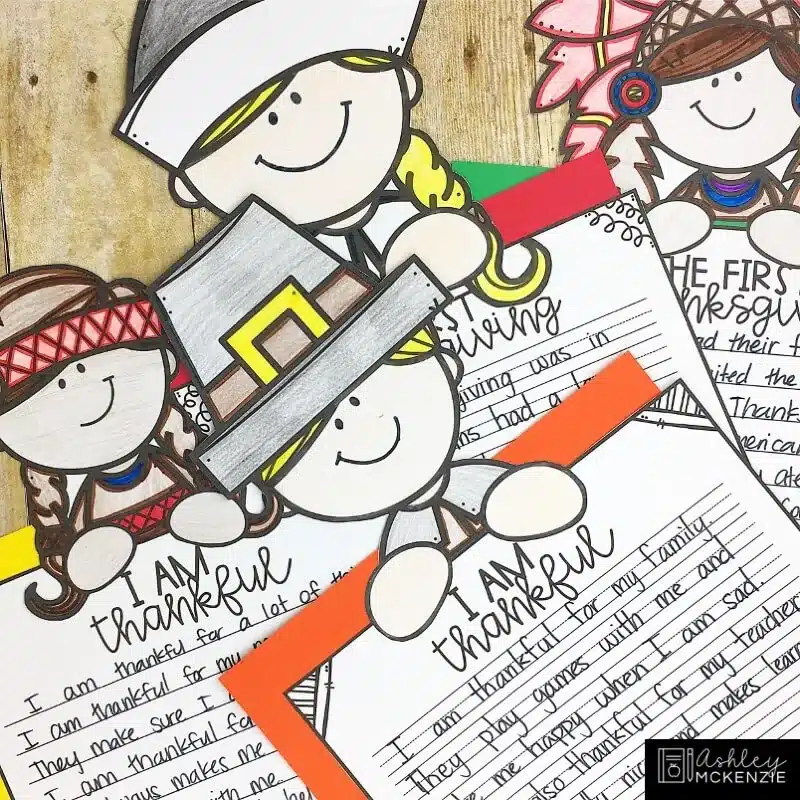
Make it easy: My Thanksgiving Writing Craft combines seasonal writing with a fun finished craft! It includes writing prompt options and brainstorming support to help students organize their thoughts before writing their final piece. Once they’re finished, their work can become a festive classroom display!
2. Turn Thanksgiving Writing Into a Craft
Sometimes the best way to get students excited about writing is to give them something fun to create with their finished work!
For this activity, have students choose a Thanksgiving writing prompt, plan their ideas, write a final draft, and then turn their writing into a seasonal craft. You could use prompts about gratitude, Thanksgiving traditions, or what the holiday means to them.
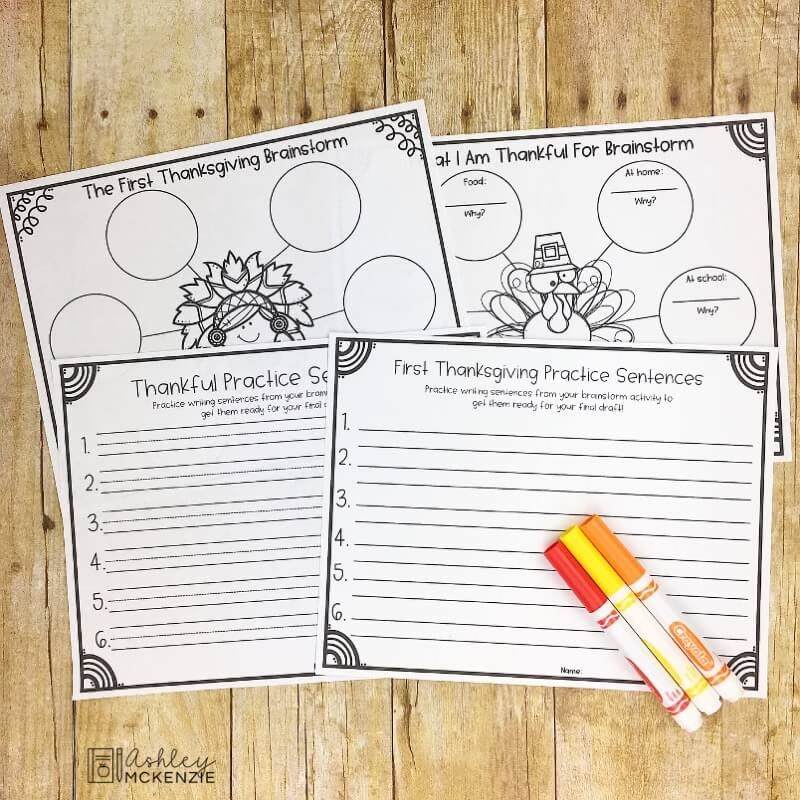
The finished projects make a wonderful hallway or bulletin board display, and students get to see their writing celebrated beyond the page.
This is also a great opportunity to practice the writing process, from brainstorming and drafting to revising and publishing.
Want to skip the prep? If you’d like a ready-to-use version of this project, my Thanksgiving Writing Craft includes the writing pages and craft components to help you get started.
3. Write From a Turkey’s Point of View
What would a turkey say if it could tell its own story at Thanksgiving?
This imaginative writing activity invites students to step into the shoes (or, technically, the feathers!) of a turkey and tell a story from its perspective.
Give students a few possible story starters:
- The week before Thanksgiving, I noticed something suspicious…
- I knew I had to come up with a plan when…
- If I could talk to a farmer, I would tell him…
- The strangest thing happened when I tried to hide…
Encourage students to include details about their turkey’s personality, its surroundings, and the problem it needs to solve. Make it as simple as needed for your students’ grade level and writing abilities. Younger students can write a few sentences, while older students can write a complete narrative with a beginning, middle, and end.
For a fun extension, have students draw and color a turkey to go along with their story!
4. Persuasive Writing Practice: Save the Turkeys!
Ready to practice persuasive writing? This Thanksgiving activity gives students a unique way to practice their writing skills while adding a hilarious and creative element.
Challenge students to create a disguise for a paper turkey and then write a persuasive piece explaining why their turkey is definitely NOT a turkey… and therefore should NOT be served as Thanksgiving dinner! Maybe it’s actually a superhero, a famous singer, a football player, or something completely unexpected!
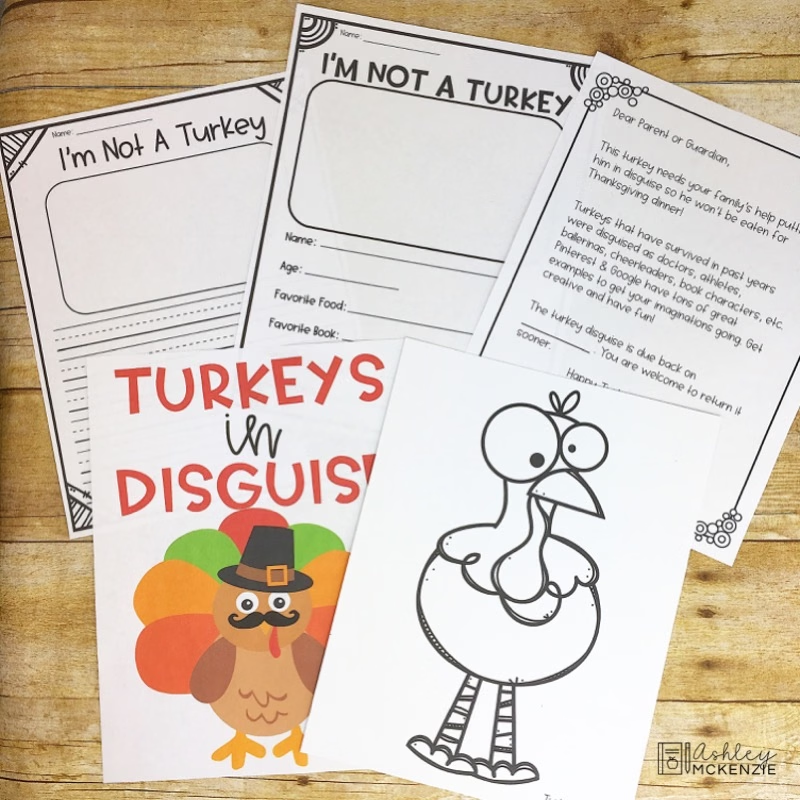
Students will need to come up with convincing reasons to support their disguise. What makes their turkey believable as something else? What reasons can they give to convince the reader? How can they make their argument believable?
This project is an engaging way to practice stating an opinion, supporting an argument with reasons, and writing from a character’s perspective. It also provides a creative way to display student work once the writing is complete.
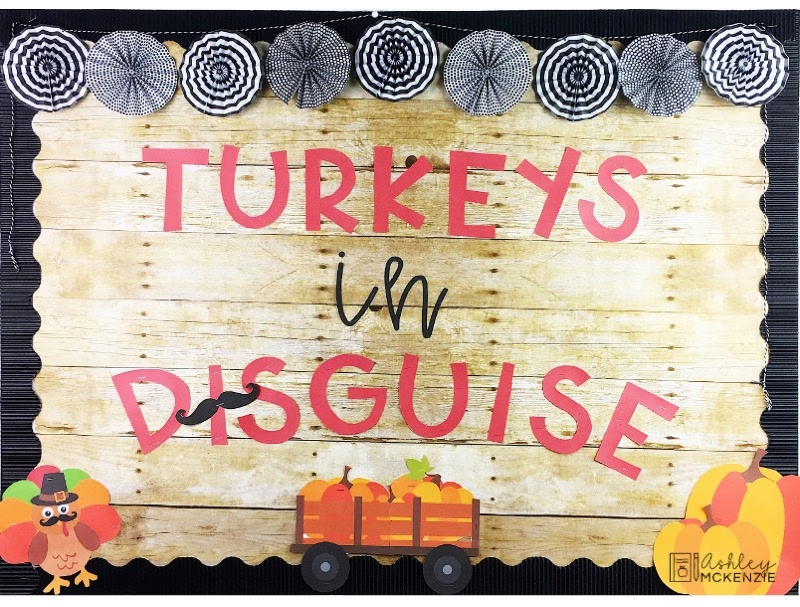
Want a ready-to-use version? My Turkeys in Disguise resource brings the craft and persuasive writing together with ready-to-print materials. It includes pages to help students plan their ideas, complete their writing, and create a coordinated Thanksgiving bulletin board display to showcase their work!
For more details and ideas for using this project with your class, check out my Turkeys in Disguise Thanksgiving Activity post.
5. Plan Your Dream Thanksgiving Feast
What would your dream Thanksgiving feast look like? What would be on the menu? Who would be there? Where would it take place?
Encourage students to bring their dream feast to life with vivid details about the food, setting, and people they’d invite. Ask them to explain why they made those choices.
Younger students can draw a picture and write a few descriptive sentences. Older students can organize their ideas into paragraphs and practice using adjectives, sensory details, and transitions.
To make the activity more flexible, students can describe their ideal fall celebration instead of a personal holiday experience. That way, everyone can participate whether or not they celebrate Thanksgiving.
6. Try These Fun Thanksgiving Writing Prompts
Sometimes students just need a creative prompt to get their imaginations going! Set up a Thanksgiving writing center with a collection of silly, surprising, and thought-provoking prompts.
Here are a few to try:
- What if your Thanksgiving turkey could talk? What would it say?
- What would happen if all the food disappeared right before Thanksgiving dinner?
- If you could invent a brand-new Thanksgiving tradition, what would it be?
- What would you do if a turkey followed you home from school?
- If you could invite any fictional character to a Thanksgiving feast, who would you choose and why?
- What would happen if you woke up on Thanksgiving morning and discovered you had turned into a turkey?
- If you could create the ultimate Thanksgiving dessert, what would it look and taste like?
- Imagine that a tiny turkey moved into your backpack. Describe your adventures together!
These prompts work well for morning work, writing centers, early finishers, or a short daily writing routine. You can also have students choose their favorite prompt and expand it into a longer story.
7. Write About Traditions and Things You Appreciate
Writing about traditions can help students practice personal narrative writing while reflecting on the experiences that matter to them.
Invite students to write about a tradition they enjoy, a favorite seasonal activity, or something they look forward to each year. They might describe a special meal, a game they play, a community event, or a simple activity they enjoy with friends.
If students don’t have a Thanksgiving tradition to share, offer alternatives such as writing about a favorite fall activity or inventing a new tradition they’d like to start.
Encourage students to include specific details that help readers picture the experience. What happens first? Who participates? What makes the experience memorable or special?
This activity works especially well for practicing sequencing, descriptive language, and personal narrative writing.
8. Write a Thanksgiving Recipe or How-To
Thanksgiving provides plenty of inspiration for procedural writing!
Ask students to explain how to make a favorite dish, prepare for a celebration, or complete a seasonal activity. They could explain how to bake a pie, prepare a favorite Thanksgiving side dish, set the table, or make a special holiday treat.
If you’d rather keep things imaginative, invite students to invent a silly Thanksgiving recipe. What ingredients would go into a turkey’s favorite dessert? How would you make a pumpkin pie for a giant?
Remind students to include a clear title, materials or ingredients, and steps in the correct order. Older students can practice using transition words such as first, next, then, and finally.
This activity is a simple way to connect writing with sequencing and everyday life skills.
Want another recipe-writing idea? Check out this recipe-writing activity from Education.com for another way to help students practice informational writing with a fun seasonal twist.
9. Finish a Thanksgiving Story
For the following Thanksgiving writing activities, give students the beginning of a story and let them decide what happens next!
A story starter can help reluctant writers get past the hardest part: figuring out how to begin. Once they have a starting point, they can focus on developing characters, describing events, and creating an ending.
Try one of these Thanksgiving story starters:
- I couldn’t believe what I saw when I opened the front door on Thanksgiving morning…
- The turkey had escaped, and dinner was just 10 minutes away!
- Everything was going perfectly until the pumpkin pie started to…
- I found a mysterious note tucked underneath my Thanksgiving plate…
- Just as everyone sat down to eat, a strange noise came from the kitchen…
Encourage students to plan what happens next before they begin writing. Younger students might write a short ending, while older students can develop the starter into a complete story with a clear problem and resolution.
For an added challenge, ask students to exchange stories with a partner and write an alternate ending!
10. Write a Thanksgiving Thank-You Letter
What better way to practice gratitude than to write a thank-you letter? Ask your students to write a letter to someone they appreciate. Have them explain what that person has done and why it matters to them.
Remind students to include a greeting (such as “Dear…”), a body explaining why they appreciate the person, and a closing (such as “Sincerely” or “With gratitude…”).
For younger students, you could have them dictate their message to a teacher or adult helper to write for them, have them complete sentence starters, or write a few simple sentences that they can copy.
Display Your Students’ Thanksgiving Writing Activities
After all that writing, give your students a chance to show off their work!
Choose a favorite piece from one of the Thanksgiving writing activities above and have students prepare a final copy. They can add an illustration, create a seasonal craft, or mount their writing on colorful paper before displaying it in the classroom or hallway.
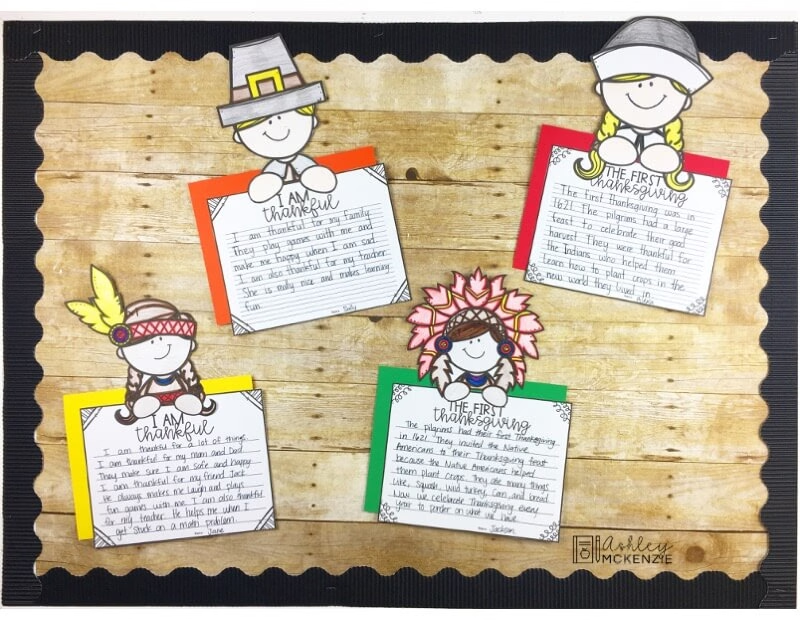
A few display ideas include:
- A gratitude-themed board featuring students’ thankful writing
- A collection of imaginative Thanksgiving stories
- A “Save the Turkey!” display featuring persuasive writing and disguised turkeys
- A gallery of students’ favorite Thanksgiving recipes or traditions
Student displays are a wonderful way to celebrate writing and give students an authentic audience for their work.
Looking for more inspiration for your November classroom display? Check out these 10 Thanksgiving bulletin board ideas for the classroom, including ways to feature student work.
Make Your Thanksgiving Writing Activities Easy This November
Thanksgiving is a great time to mix things up in your writing lessons! Whether your students are reflecting on what they’re thankful for, imagining a turkey’s wild adventures, or practicing persuasive writing, these Thanksgiving writing activities offer plenty of ways to keep writing meaningful and fun.
And if your November schedule is already packed (because when is it not?), you don’t have to create every activity yourself.
My Thanksgiving Writing Craft is a ready-to-use option for gratitude writing, while my Turkeys in Disguise resource combines a creative turkey craft with persuasive writing practice.


Both offer a way to bring seasonal writing into your classroom without adding a ton of prep to your to-do list.
Here’s to a November full of creative writing, proud students, and a little less planning stress!